headless.first
Blog

Headless CMS Insights

Migrations, replatforming guides, and engineering resources from the HeadlessFirst team.

All posts

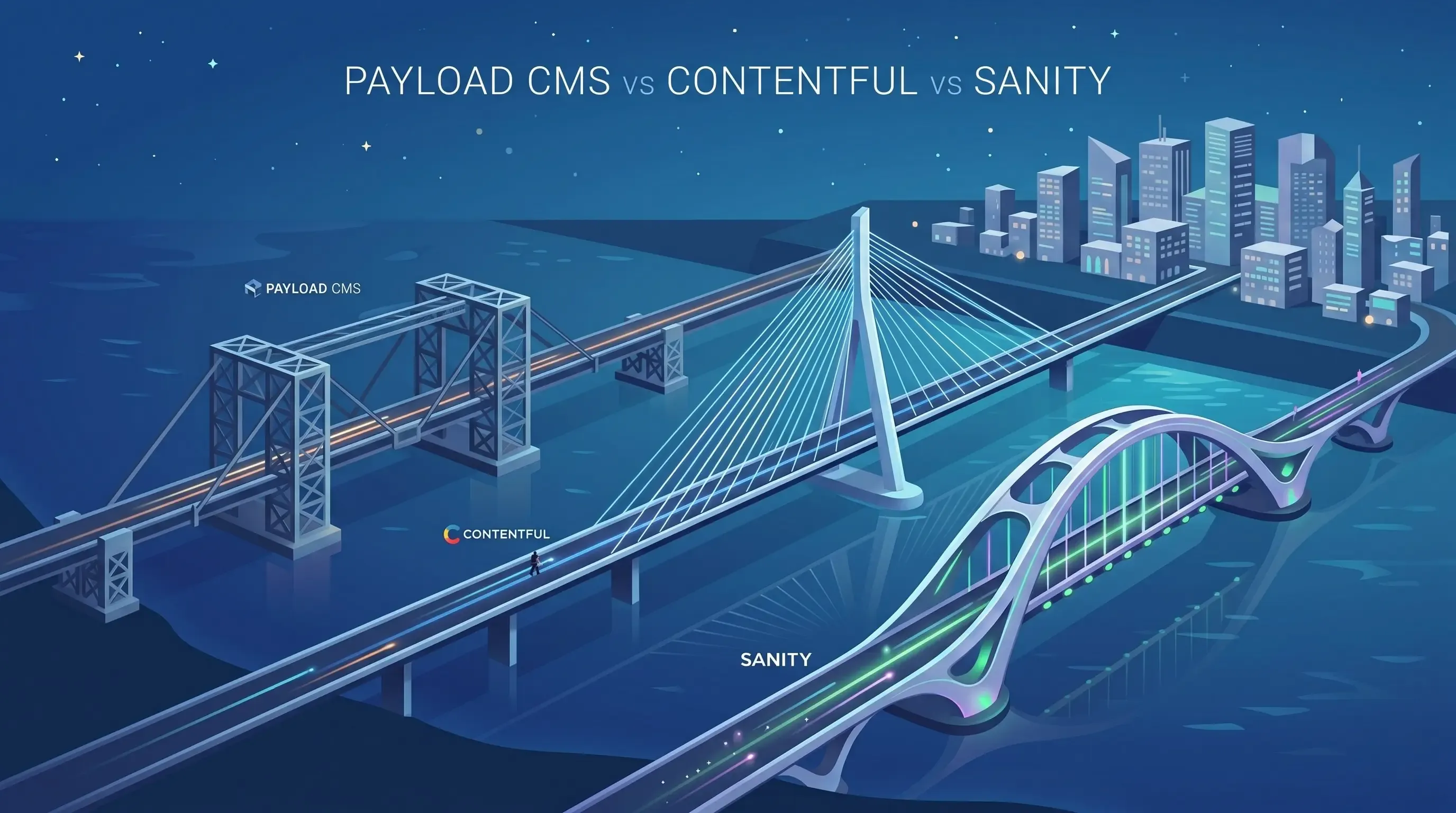
Payload CMS vs. Contentful vs. Sanity: An Honest Comparison for Growing Businesses
Headless CMSHeadless CMSPayload CMS

Payload CMS vs. Contentful vs. Sanity: An Honest Comparison for Growing Businesses

The headless CMS market splits between expensive managed SaaS platforms and self-hosted open-source frameworks. Contentful charges enterprise prices for data you do not own. Sanity offers real-time collaboration but locks your content in their cloud. Payload CMS gives you full ownership, zero SaaS fees, and deep TypeScript-native customisation. Here is the honest comparison.

Why Your Content Is Trapped (And How Headless CMS Sets It Free)
Headless CMSHeadless CMSContent Operations

Why Your Content Is Trapped (And How Headless CMS Sets It Free)

Your business has been creating content for years — blog posts, product descriptions, case studies, documentation. Almost all of it is trapped inside a WordPress database as HTML blobs, accessible only through your website template. As AI discovery, mobile apps, and multi-channel distribution become table stakes, unstructured trapped content becomes a compounding liability. Here is what structured headless content looks like instead.

The Headless CMS Myth-Busting Guide: 7 Things You Have Been Told That Are Not True
Headless CMSHeadless CMSFor Business Owners

The Headless CMS Myth-Busting Guide: 7 Things You Have Been Told That Are Not True

Headless CMS is too expensive. Non-technical editors cannot use it. It is bad for SEO. It will take a year to migrate. You will still depend on developers for everything. These are the seven most common objections we hear from business owners considering a headless architecture — and a frank, evidence-based response to each of them.

Why Next.js Is the Right Foundation for Every Serious Marketing Website
Next.jsNext.jsHeadless CMS

Why Next.js Is the Right Foundation for Every Serious Marketing Website

Next.js has become the default choice for serious marketing sites and web applications. This post makes the business case directly: what Next.js does differently, how hybrid rendering and React Server Components translate into SEO rankings and conversion rates, and why the developer talent market strongly favours it over PHP-based alternatives.

SSG, SSR, ISR, RSC: Next.js Rendering Modes Explained for Non-Developers
Next.jsNext.jsPerformance

SSG, SSR, ISR, RSC: Next.js Rendering Modes Explained for Non-Developers

SSG, SSR, ISR, RSC — four acronyms your development team uses to describe how your Next.js pages are built and delivered. Each choice directly affects load speed, Google rankings, content freshness, and server costs. This plain-English explainer demystifies all four rendering modes, shows when each is appropriate, and explains why mixing them intelligently is a structural advantage traditional CMS platforms cannot replicate.

Core Web Vitals Are Now a Revenue Metric. Here Is the Proof.
PerformancePerformanceSEO

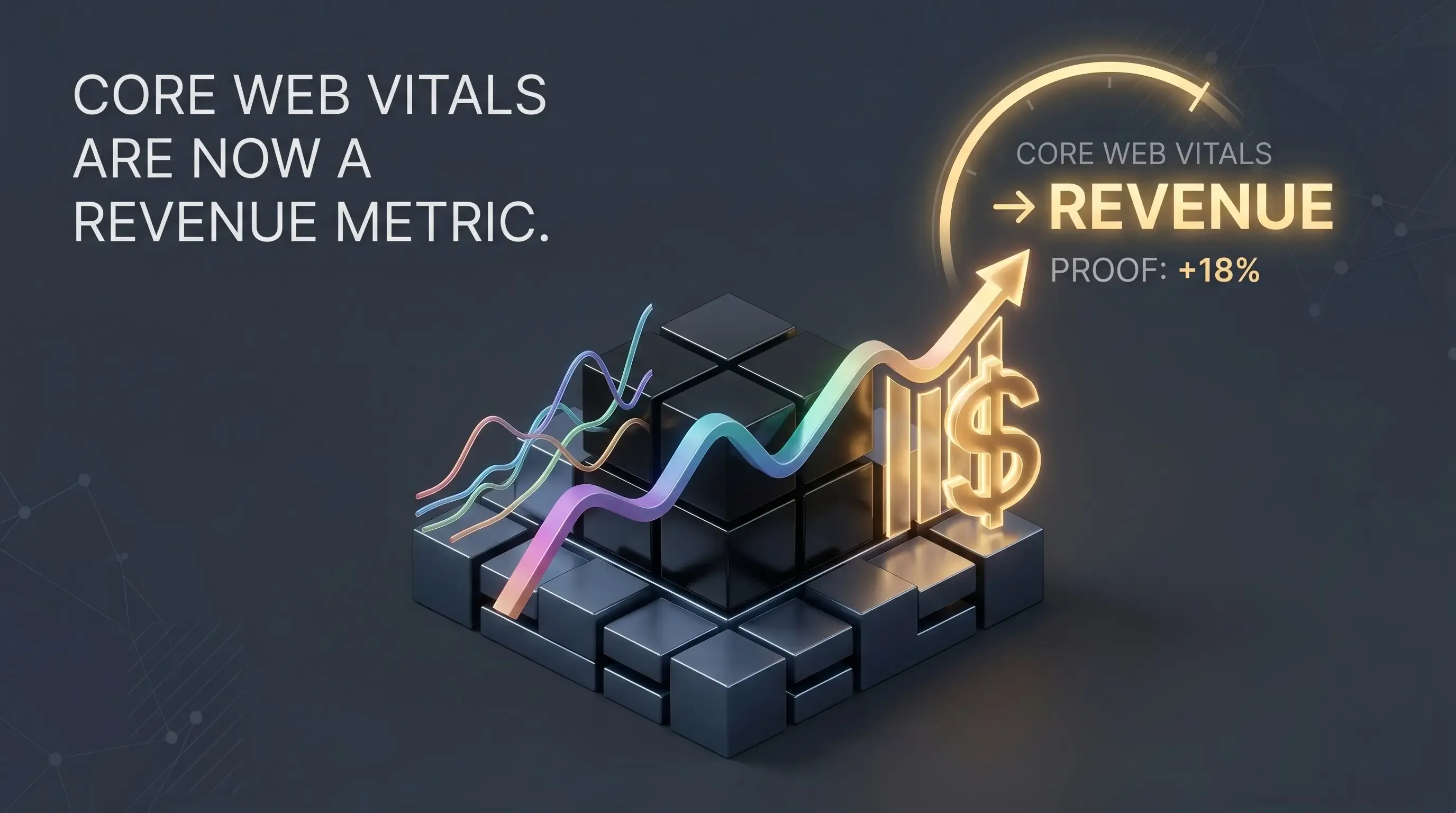
Core Web Vitals Are Now a Revenue Metric. Here Is the Proof.

In 2025 the relationship between website speed and business revenue is documented, quantified, and commercially significant. Improving Core Web Vitals from Poor to Good correlates with a 25% conversion rate increase, a 30% revenue-per-visitor lift, and compounding SEO gains. This post translates the technical language of CWV into the business language of revenue, customer acquisition cost, and competitive positioning.

Why Your Website Is Slow: The 7 Real Causes and What to Actually Fix
PerformancePerformanceNext.js

Why Your Website Is Slow: The 7 Real Causes and What to Actually Fix

Slow is not a cause — it is a symptom. A website can be slow for a dozen different structural reasons, and the fix for each one is completely different. Applying the wrong fix wastes time and money while the real problem stays in place. This post identifies the 7 most common causes of slow websites in 2026: late LCP image discovery, render-blocking JavaScript, oversized images, slow TTFB, third-party script bloat, font loading, and CDN misconfiguration.

Your Website Is Either Working for You or Against You. Here Is How to Know Which.
For Business OwnersFor Business OwnersPerformance

Your Website Is Either Working for You or Against You. Here Is How to Know Which.

Most business owners think of their website as a cost centre or a marketing asset. The data supports a different frame entirely: your website is either your most effective salesperson or your most expensive underperforming one. This post gives you 7 specific signals that tell you which mode your site is in — and a decision framework for what to do about it.

The 10 Questions to Ask Any Web Agency Before You Sign Anything
For Business OwnersFor Business OwnersHeadless CMS

The 10 Questions to Ask Any Web Agency Before You Sign Anything

Hiring a web development agency is one of the most consequential technology decisions a growing business makes. Most business owners cannot evaluate the technical quality of an agency's work from a portfolio alone. These ten questions — about ownership, performance, CMS choice, editorial independence, security, QA, and post-launch support — reveal what the portfolio cannot.

12